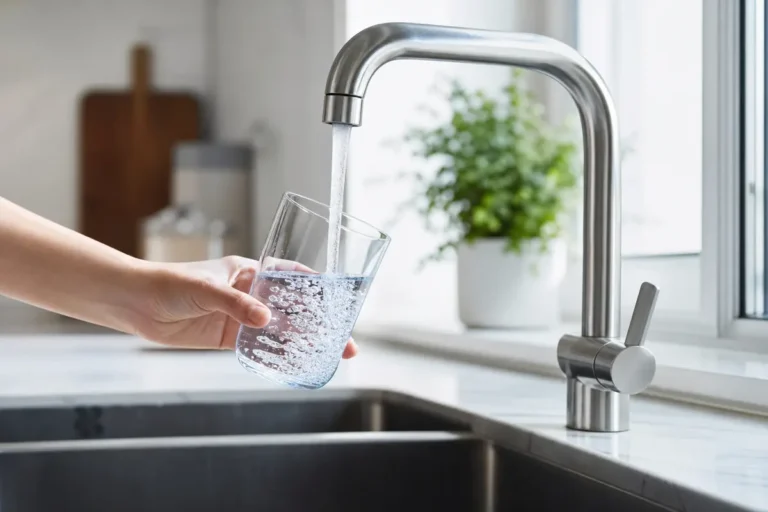
Most people don’t spend much time thinking about their water. You turn on the faucet, fill a glass, take a shower, wash the dishes, and move on with your day. Water is supposed to be one of those dependable things in the background.
Until it isn’t.
A reddish mark appears around the bathroom drain. The shower glass develops cloudy spots. Coffee tastes slightly different. Maybe the water has a faint sulfur smell, or you’re suddenly buying bottled water because the tap just doesn’t taste right anymore.
These signs don’t necessarily mean there’s a serious problem, but they shouldn’t be ignored either. Changes in water appearance, taste, or odor can point to minerals, sediment, treatment issues, plumbing conditions, or contaminants. The first step isn’t panic. It’s paying attention and figuring out what’s actually happening.
Those Stains Have a Story
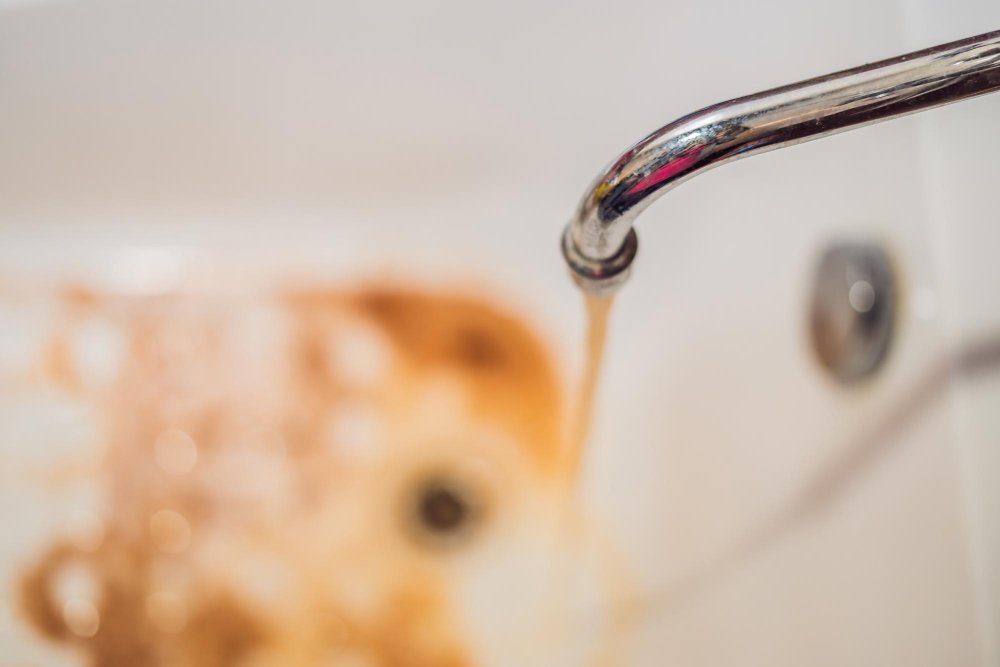
Few things make a homeowner notice their water faster than stubborn stains. A sink that used to stay clean now has orange or brown marks around the drain. White residue appears on faucets. Laundry comes out looking slightly different.
In many cases, minerals in the water are responsible.
Iron is a particularly common culprit, especially in private well water. Depending on the amount and form of iron present, it can create reddish, orange, yellow, or brown staining. Manganese may produce darker stains. Hardness minerals can leave a chalky buildup on fixtures and shower doors.
The frustrating part is that ordinary household cleaners may only remove the visible result. If the source water continues carrying the minerals, the stains simply come back.
That’s why identifying the underlying water chemistry is more useful than constantly scrubbing the same spots.
Why Iron and Minerals Need Different Attention
Not all mineral problems behave in exactly the same way. Dissolved iron, for example, may initially be invisible when water comes out of the tap but oxidize after exposure to air, producing that familiar rusty appearance.
Iron & mineral stains can therefore be more than a cosmetic annoyance. They may indicate that your water contains elevated levels of minerals that should be measured and properly treated.
Depending on the water chemistry, treatment could involve filtration, oxidation, softening, or a combination of technologies. The appropriate solution depends on the type and concentration of the minerals involved.
In other words, don’t buy a treatment system simply because the box says “iron removal.” Test first. Two water sources with similar-looking stains can require very different approaches.
Taste Can Change for Several Reasons
A strange taste is often what gets someone’s attention first. Maybe water tastes metallic. Perhaps it has a chlorine-like flavor, a salty quality, or just doesn’t taste fresh.
Sometimes the issue is related to naturally occurring minerals. In other cases, it could be related to disinfectants, plumbing materials, stagnant water, or another water-quality concern.
And then there are situations where taste isn’t the issue at all—the water may look and taste perfectly normal while still containing substances that aren’t detectable by your senses.
That distinction matters.
If you’re dealing with bad tasting or contaminated water, don’t rely on taste alone to decide whether the water is safe. Testing can reveal characteristics that your eyes, nose, and tongue simply can’t detect.
Start With a Water Test, Not a Guess
Water treatment can get complicated quickly. There are sediment filters, carbon filters, reverse osmosis systems, softeners, iron filters, UV systems, and other options. Each has a purpose, and choosing the wrong one can mean spending money without actually fixing the problem.
A water test gives you a starting point.
For homeowners unsure where to begin, a free home water test can be a practical first step when such testing is available from a qualified local water-treatment provider. It can help identify common concerns and determine whether further laboratory testing may be appropriate.
Testing isn’t just about finding something wrong. Sometimes it confirms that your water is fine in a particular area and that the problem is actually coming from plumbing or an isolated fixture.
That’s useful information too.
Private Wells Deserve Extra Attention
If your home uses a private well, you have more responsibility for monitoring the water supply. Unlike a municipal system, your well isn’t managed by a public utility that routinely handles treatment and distribution.
Well water can pick up minerals from surrounding rock and soil. Changes in groundwater conditions, heavy rainfall, flooding, nearby land activity, or problems with the well itself can also affect quality.
Regular testing is a sensible part of well ownership, particularly when water changes suddenly.
A new smell, unusual color, cloudiness, staining, or noticeable taste difference is worth investigating. You don’t need to assume the worst, but you shouldn’t dismiss a change that wasn’t there before.
Your Plumbing May Be Part of the Problem
It’s easy to blame the water source whenever something tastes or looks unusual. But the plumbing inside the home can sometimes contribute.
Older pipes, water heaters, fixtures, and fittings can affect water quality under certain conditions. If the problem appears only at one faucet while other taps seem normal, that can be a clue.
Try paying attention to where and when the issue occurs.
Does the water look different after sitting overnight? Is the taste noticeable only from one faucet? Does hot water have a different odor from cold water? Do stains appear throughout the house or only in one bathroom?
Small observations like these can help a professional narrow down the cause.
Treatment Should Match the Actual Problem
One of the biggest mistakes homeowners make is treating symptoms without understanding the source. A filter may improve taste but do little for hardness. A softener can address hardness but isn’t designed to remove every contaminant. A sediment filter may capture particles while leaving dissolved minerals untouched.
There isn’t a universal “best” water treatment system.
The right setup depends on your water analysis, household needs, flow requirements, plumbing arrangement, and budget. Some homes need one treatment stage. Others benefit from several systems working together.
A good provider should be willing to explain why a particular technology is being recommended instead of simply presenting a large equipment package.
Don’t Forget About Maintenance
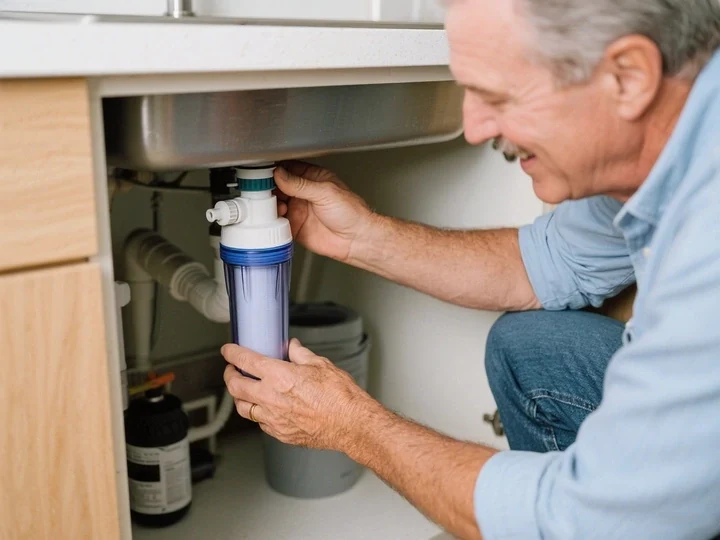
Water treatment equipment isn’t completely hands-off. Filters need changing. Media can eventually become exhausted. Some systems need cleaning, regeneration, inspections, or replacement parts.
Maintenance is especially important when the system is protecting appliances or improving drinking water quality. A neglected filter can stop performing effectively, and homeowners may not notice immediately.
Before installation, ask what routine service looks like. Find out how often components need attention and what ongoing costs might be involved.
It’s better to know upfront than get an unpleasant surprise later.
Better Water Begins With Better Information
Stains and strange tastes are annoying, but they can also be useful clues. They tell you something has changed—or at least that something deserves a closer look.
Rather than covering stains with stronger cleaners or switching between bottled-water brands, take a step back. Test the water. Look at where the problem occurs. Consider whether it affects the whole house or only a single fixture. Then choose treatment based on evidence.
That approach is usually more practical, more economical, and far less frustrating.
Good water treatment isn’t about buying the most complicated equipment on the market. It’s about solving the right problem. Once you understand what’s actually in your water, the path forward becomes much clearer.
And when the stains finally stop returning, the tap water tastes fresh, and you can fill a glass without wondering what’s lurking inside it, you’ll probably wonder why you waited so long to look into it.