Most of us have a pretty simple relationship with water. Turn on the tap, fill a glass, take a shower, move on with the day. It’s easy to forget that the water entering a home carries the characteristics of its source, treatment process, plumbing system, and local environment. When something changes, though, we notice quickly.
Maybe the water tastes slightly metallic. Perhaps there’s a white crust around the faucet. The shower glass never seems to stay clean, no matter how often it’s scrubbed. These aren’t necessarily signs of a major problem, but they’re worth paying attention to.
Improving household water quality starts with one basic idea: don’t guess when you can learn. Testing the water, understanding the results, and choosing treatment based on actual needs can save money and prevent a lot of unnecessary tinkering.
Every Home Has Its Own Water Story
Water quality isn’t identical from one property to another. Municipal supplies are treated and monitored, but characteristics can still vary depending on the source and distribution system. Private wells can be even more variable because groundwater naturally picks up minerals and other substances as it moves through soil and rock.
Hardness is one of the most common issues homeowners encounter. Calcium and magnesium can cause scale on fixtures, reduce soap performance, and gradually contribute to deposits inside water heaters and other equipment.
Other homes may be more concerned about chlorine taste, sediment, sulfur odors, iron staining, or specific contaminants identified through testing. The symptoms can overlap, which is why buying equipment based on a single complaint isn’t always the smartest move.
Testing Should Come Before Treatment
It’s tempting to walk into a store, see a shiny filtration system, and think, “That looks like what I need.” But water treatment doesn’t really work that way.
A water test can identify important characteristics such as hardness, pH, chlorine, iron, total dissolved solids, and other indicators. The exact tests needed depend on whether the property uses municipal water or a private well and what symptoms you’re experiencing.
For homeowners who want an easy starting point, free water testing may be available through local providers or water-treatment companies. While free testing can be useful, it’s still important to understand what is actually being tested and whether additional laboratory analysis is necessary.
The point isn’t to collect the longest report possible. It’s to gather useful information that can guide a sensible decision.
Understanding Conditioning Systems
The term water conditioning can cover several different technologies, which sometimes makes the subject confusing.
Water softeners are one example. They are designed primarily to reduce hardness minerals, particularly calcium and magnesium. This can help control scale and make cleaning easier.
Other conditioning systems may be designed for sediment, iron, sulfur odors, or other specific water-quality concerns. Some systems combine multiple treatment methods so that each component handles a particular issue.
That can be useful, but more equipment isn’t automatically better. A homeowner shouldn’t have to buy five treatment stages when one properly selected technology will solve the actual problem.
Hard Water Leaves Clues Around the House
Hard water usually announces itself in small ways.
You might see chalky spots on shower doors or notice that faucets develop crusty deposits. Soap may seem less effective, leaving a film behind. Laundry can feel different, and water heaters may accumulate mineral scale over time.
A softener can reduce hardness before the water travels throughout the home. That can be particularly helpful for households with high water hardness or appliances that are sensitive to scale.
Still, softening doesn’t mean the water has been purified of every possible contaminant. It’s one treatment approach for one category of water-quality problem. Understanding that distinction prevents unrealistic expectations.
Filtration Has a Different Purpose
Filtration is another broad category, and its effectiveness depends heavily on the filter media and the substances you’re trying to reduce.
Activated carbon filters are commonly used to improve taste and reduce chlorine and certain organic compounds. Sediment filters can capture particles such as sand, rust, or dirt. More specialized technologies can target particular contaminants.
This is why the phrase “best water filter” doesn’t have much meaning without context. The right filter for one home may be unnecessary or ineffective in another.
Think about what you’re trying to accomplish. Better taste? Reduced sediment? Whole-house treatment? Drinking-water purification? Once the goal is clear, selecting technology becomes much easier.
Whole-House or Point-of-Use?
Another practical question is where treatment should happen.
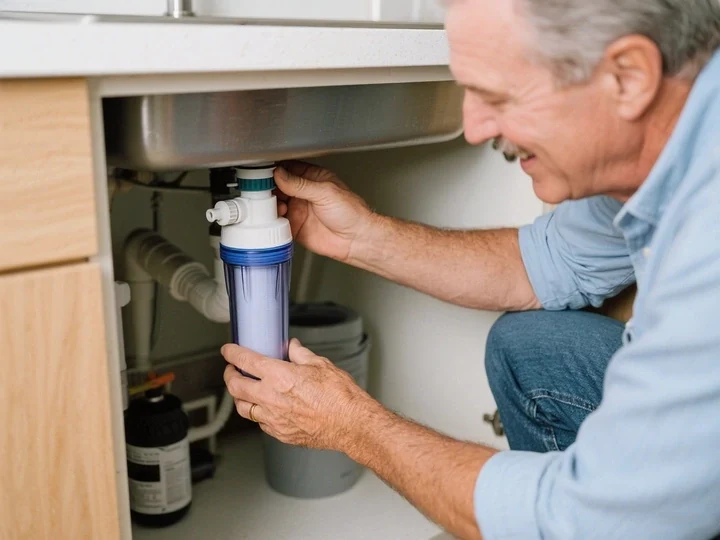
Point-of-use systems treat water at a specific location, such as a kitchen faucet. They’re often useful when drinking and cooking water are the main concern.
Whole-house systems treat water as it enters the property, allowing treated water to reach showers, washing machines, bathrooms, and appliances. They can be useful when the issue affects the entire supply.
There isn’t a universal winner here. A household concerned mainly about drinking-water taste may not need a large whole-home setup. Meanwhile, a property dealing with widespread hardness or sediment may benefit from treatment at the main entry point.
Maintenance Is Easy to Forget
Water treatment equipment works best when someone remembers to maintain it. That’s perhaps the least exciting part of the entire subject, but it’s also one of the most important.
Filters have replacement schedules. Softener systems need routine attention. Some equipment requires periodic cleaning, inspection, or professional servicing.
Don’t wait until the water tastes strange again before checking the system. Keep a simple calendar with replacement dates and service intervals. It takes very little effort and makes household maintenance more predictable.
If the water changes suddenly despite regular maintenance, investigate the cause rather than simply replacing equipment blindly.
Looking for Clean Water Solutions
When homeowners explore clean water solutions, they should consider more than the equipment itself. System capacity, water pressure, installation requirements, maintenance costs, replacement parts, and warranty coverage all matter.
A professional evaluation can be particularly helpful when test results reveal several issues at once. A knowledgeable provider should be able to explain what each component does in plain language.
Ask questions. What does the system remove? What does it not remove? How frequently do filters need changing? How much water can it treat? What are the expected operating costs?
If someone can’t answer those questions clearly, that’s useful information too.
Make Water Treatment a Thoughtful Decision
There’s no need to turn water quality into a complicated science project. Start with the basics. Notice changes in taste, odor, appearance, or scale. Test the water. Understand what the results mean. Then choose technology that addresses the actual issue.
Sometimes the answer is a softener. Sometimes it’s a carbon filter. Sometimes a combination makes sense, especially when different problems affect different parts of the home.
The goal isn’t to own the most sophisticated treatment system. It’s to have water that works well for the people, plumbing, appliances, and routines that depend on it.
Good water treatment tends to disappear into everyday life once it’s working properly. You stop thinking about the spots on the glass. The faucet stays cleaner. The shower feels better. The water tastes the way you expect it to.
And really, that’s a pretty good outcome — solving a problem quietly and getting on with your day.