Water has a funny way of becoming noticeable only when something goes wrong. You can go years without thinking twice about the water coming from the kitchen faucet, then suddenly you’re staring at a cloudy glass, scrubbing white marks from the shower, or wondering why your morning coffee tastes slightly different.
These changes aren’t always dramatic, but they can be frustrating. More importantly, they can be signs that your home’s water needs a closer look.
The good news is that most water-quality concerns have identifiable causes and practical treatment options. The trick is figuring out what you’re dealing with before buying equipment. A little knowledge upfront can save plenty of money, time, and trial-and-error later.
Hard Water Can Affect Everyday Life
One of the most common household water issues is hard water. It happens when water contains elevated levels of minerals, particularly calcium and magnesium. These minerals aren’t necessarily something you can see floating around in a glass, but their effects tend to show up elsewhere.
White scale around faucets is a classic example. You may also notice spots on dishes, dry-feeling skin after a shower, or soap that doesn’t seem to lather as easily as it should.
Over time, mineral scale can accumulate inside plumbing and appliances. Water heaters are especially vulnerable because minerals can settle and build up where they’re least welcome.
A water softener can often help with hardness by reducing the minerals responsible for these problems. But the appropriate solution depends on the severity of the issue and the overall condition of the water.
Strange Odors May Point to a Different Problem
Not all water problems leave white residue. Some announce themselves through smell.
If water has a rotten-egg-like odor, sulfur compounds may be involved. A metallic smell or reddish staining can sometimes be associated with iron. These problems are particularly common in some private well supplies.
The important thing is not to assume every unpleasant odor has the same cause.
A treatment approach designed for one issue may have little effect on another. That’s why testing and proper diagnosis are so useful before selecting equipment.
Iron and Sulfur Can Leave Their Mark
When homeowners notice orange or brown staining around sinks, tubs, or toilets, iron is often one of the first suspects. Depending on the chemistry of the water, iron can appear in different forms, making it more complicated than simply installing a standard filter.
The same goes for iron & sulfur concerns. Sulfur-related odors can be unpleasant enough that people avoid drinking the water altogether, while iron may create staining and affect taste.
Specialized filtration or oxidation-based treatment may be considered depending on the water chemistry. In some situations, several treatment stages work better together than one piece of equipment trying to do everything.
Again, there’s no magic box. Water chemistry matters.
Chlorine Isn’t Always the Whole Story
For homes connected to municipal water, disinfectants are an important part of keeping drinking water supplies safe. Chlorine is commonly used, but some utilities also use chloramines, a combination of chlorine and ammonia that provides longer-lasting disinfection.
Some people notice a swimming-pool-like taste or odor, while others are more sensitive to the change in flavor when making coffee or tea.
Activated carbon filtration is commonly used to reduce chlorine and certain related tastes and odors. However, treatment performance depends on the filter design, contact time, flow rate, and the specific water chemistry.
That’s why chlorine & chloramines should be treated as a water-quality question rather than simply a reason to buy the first carbon filter you find.
Your Water Source Changes the Equation
Where your water comes from makes a difference.
Municipal supplies are generally treated and monitored before reaching homes, while private wells depend on local groundwater conditions and the condition of the well itself. That doesn’t mean city water is perfect or well water is unsafe. It simply means the potential concerns can be different.
Well owners may encounter minerals, sediment, iron, sulfur compounds, or other naturally occurring substances. Changes in weather and groundwater conditions can also influence the water over time.
For that reason, private well owners should take a more proactive approach to monitoring their water.
Test Before You Treat
It can be tempting to diagnose water quality by appearance alone. Unfortunately, that approach has limits.
Clear water can contain substances that aren’t visible. Likewise, an unpleasant taste doesn’t necessarily tell you exactly what’s causing it.
Water testing provides a clearer picture. Depending on the situation, testing may evaluate hardness, pH, iron, sulfur-related compounds, disinfectants, bacteria, and other characteristics.
Once the results are available, treatment choices become much more logical.
Think of it as getting directions before starting a long drive. You might eventually reach the destination without a map, but why make the journey harder than it needs to be?
Not Every Problem Needs Whole-Home Treatment
Another point that often gets overlooked is the difference between treating all household water and treating water at a specific location.
If scale is affecting showers, appliances, faucets, and plumbing throughout the property, whole-home treatment may make sense.
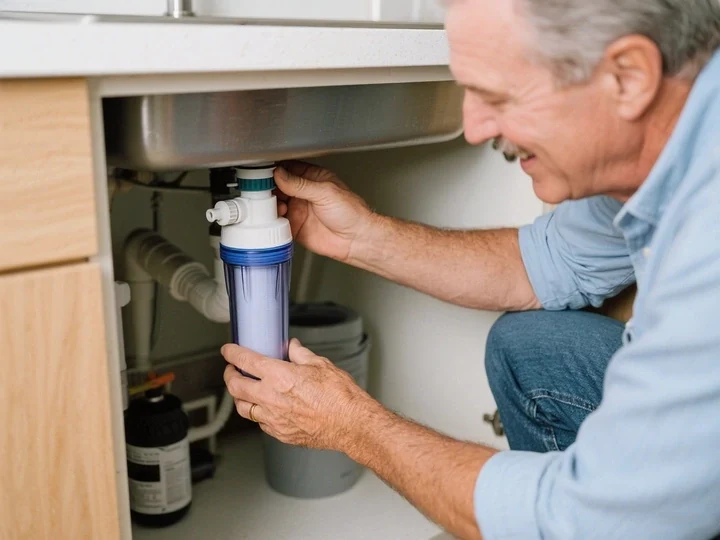
But if the main complaint is drinking-water taste, a point-of-use system in the kitchen might be enough.
The best choice depends on how the water is being used and where the problem actually occurs. There’s little value in treating hundreds of gallons of water for a concern that only matters at one faucet.
Maintenance Is Part of the Deal
Water treatment equipment isn’t something you install and forget about forever.
Filters need changing. Some systems require periodic cleaning, replacement media, or adjustments. Components can wear out, and water conditions can change.
A neglected system may perform poorly even if it was excellent when first installed.
It’s worth keeping a simple maintenance record. Note when filters are replaced and watch for changes in pressure, taste, odor, or staining. Small changes can provide an early warning that something needs attention.
Avoid the One-Size-Fits-All Trap
Water treatment advertisements can make complicated problems sound wonderfully simple. One filter, one system, one easy fix.
Real homes aren’t always that cooperative.
A household may have hard water plus iron. Another may have sediment and unpleasant odors. Someone else may primarily want better-tasting drinking water.
Trying to solve all of these problems with one generic system isn’t always realistic. In many cases, a properly designed combination of technologies provides better results.
The objective isn’t to own the most equipment. It’s to have the right equipment.
Better Water Starts With Understanding
Water quality doesn’t have to become an overwhelming project. Start by paying attention to what you’re seeing, tasting, or smelling, but don’t stop there.
Testing can help identify the underlying issue. From there, treatment can be selected around actual water conditions rather than assumptions.
Whether the concern involves mineral buildup, unpleasant odors, staining, or disinfectant taste, the solution should fit the problem.
And that’s really the heart of good water treatment: understand first, treat second.
Once you know what’s happening in your water, the path forward usually becomes a lot clearer.