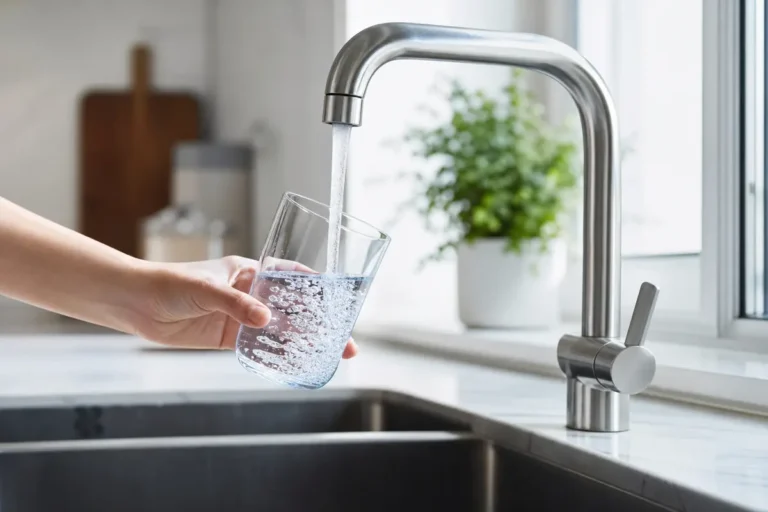
Most people don’t think much about the water coming out of the tap. Turn it on, fill the glass, take a shower, wash the dishes. It’s one of those everyday things that quietly does its job.
Then something changes.
Maybe your shower door develops a cloudy film. The bathroom sink gets orange marks. The water looks slightly murky after heavy rain, or your coffee suddenly tastes a little strange. None of these signs should automatically cause alarm, but they can be useful clues.
Water problems often leave a trail of small annoyances before they become expensive ones. Understanding those clues can help homeowners decide whether they need testing, filtration, softening, or simply a closer look at the plumbing.
The important thing is not to guess. Water can be surprisingly complicated, even when it looks perfectly clear.
When Mineral-Rich Water Becomes a Household Headache
One of the most common issues homeowners encounter is hard water. It contains higher concentrations of naturally occurring minerals, particularly calcium and magnesium.
Hard water isn’t usually considered dangerous at ordinary household levels, but it can certainly make itself known. Soap may struggle to lather. Dishes can come out of the dishwasher with spots. Showerheads may collect mineral buildup, and faucets can develop a crusty ring that seems impossible to keep away.
Over time, scale can accumulate inside water-using appliances. Water heaters, coffee machines, washing machines, and other equipment can all be affected by mineral deposits.
For a homeowner, the frustrating part is that cleaning doesn’t necessarily solve the underlying problem. You wipe away the residue today, and a few weeks later, there it is again.
Orange Stains Can Have a Story Behind Them
Those reddish-orange marks around a toilet, sink, or bathtub are another common complaint, particularly in homes supplied by private wells.
In many cases, iron in the water is responsible. Iron can occur naturally in groundwater and may initially be invisible when water comes from the tap. Once exposed to air, however, dissolved iron can oxidize and create noticeable staining.
The result isn’t exactly pretty. White porcelain can develop orange streaks, laundry may become discolored, and fixtures can look dirty even after they’ve been cleaned.
The amount and form of iron matter. Different types of iron require different treatment approaches, which is why simply installing a basic filter isn’t always enough. Testing can help determine what kind of treatment is appropriate.
Rust Is Not Always Coming From the Water Source
Here’s where things can get a little confusing.
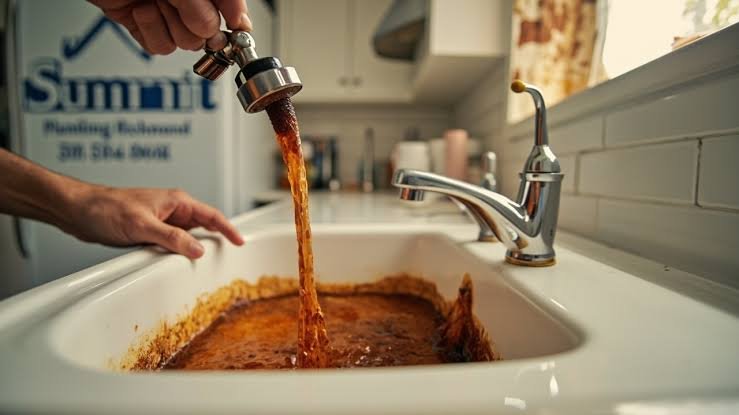
People often see reddish water and immediately assume the well or municipal supply is the problem. Sometimes that’s true. Other times, the source may actually be the home’s plumbing.
Old or deteriorating pipes can contribute rust and metallic particles to household water. If the discoloration appears mainly after water has been sitting in the pipes overnight, plumbing could be worth investigating.
Try paying attention to when the problem occurs. Does the water clear after running the faucet for a short period? Does it happen at every fixture or only one? Is the cold water affected, or mostly hot water?
Those details can give a plumber or water-treatment professional useful information. It’s a small bit of detective work, but it can prevent you from treating the wrong problem.
Cloudy Water Doesn’t Always Mean Something Serious
Cloudiness can be unsettling. After all, nobody wants to pour a glass of water and wonder why it doesn’t look quite right.
One possible cause is sediment, which refers to particles such as sand, silt, clay, or other physical material suspended in water. Private wells can be particularly susceptible to sediment, especially after changes in groundwater conditions, maintenance work, flooding, or heavy rainfall.
Sediment can create visible cloudiness and may also settle at the bottom of a glass. It can clog faucet aerators, shorten the life of certain filters, and interfere with other treatment equipment.
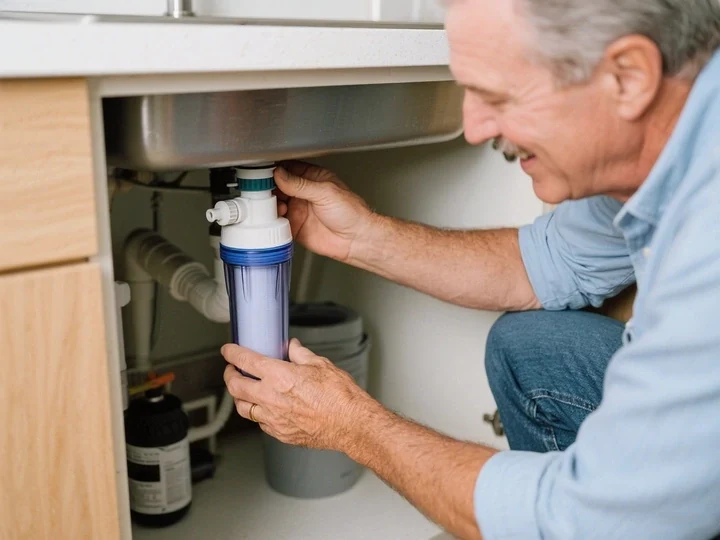
A sediment filter may help when particles are the primary concern, but the filter needs to be properly sized for the water flow and particle load. A filter that is too small can become clogged quickly, while an unsuitable filter may not capture the particles causing the problem in the first place.
One Water Problem Can Hide Another
Water quality issues don’t always arrive one at a time.
A household might have hard water combined with iron staining. Another property may have sediment along with unpleasant odors. Some homes may have relatively clean water but still experience plumbing-related discoloration.
This is why choosing equipment based on a single symptom can be risky.
A water softener, for example, is designed primarily to address hardness minerals. It isn’t a universal solution for sediment, every type of iron, bacteria, or other contaminants. Likewise, a standard sediment filter isn’t designed to solve every dissolved-water problem.
The treatment method should match the problem.
Testing Gives You a Starting Point
Water testing may not be the most exciting item on a homeowner’s to-do list, but it can save plenty of frustration later.
Testing can identify characteristics such as hardness, pH, iron levels, manganese, total dissolved solids, bacteria, and other parameters depending on the type of analysis performed.
For private-well owners, testing is especially useful because groundwater conditions aren’t necessarily static. Changes in the surrounding environment or the condition of the well can affect water quality.
Testing also creates a baseline. If you install treatment equipment later, you have something to compare against. That’s much more useful than relying solely on taste, smell, or appearance.
The Right Treatment Depends on the Cause
Once the water has been evaluated, treatment becomes a much more straightforward conversation.
Hardness may call for softening. Suspended particles may require sediment filtration. Iron or manganese may need specialized filtration or oxidation-based treatment. Taste and odor concerns can sometimes be improved through activated carbon or other appropriate technologies.
In some homes, more than one treatment stage makes sense. A pre-filter may protect downstream equipment, while another system addresses dissolved minerals or specific contaminants.
The goal isn’t to install every available technology. It’s to create a treatment setup that does what the water actually needs.
Don’t Forget About Maintenance
A water treatment system isn’t a set-it-and-forget-it appliance.
Filters need replacement. Certain treatment media eventually need servicing or replacement. Softener systems require proper operation and, where applicable, salt management. Components can wear out, and changes in water quality may require adjustments.
Ignoring maintenance can gradually reduce performance. Sometimes the first sign is familiar: stains return, pressure drops, or the water begins to taste different again.
Keeping track of service dates and watching for changes in water quality can help catch problems early.
Better Water Starts With Paying Attention
Your water doesn’t need to be dramatic to tell you something. A little scale around the faucet, an orange stain, cloudy water, or an unusual taste can all be worth noticing.
At the same time, there’s no reason to assume every cosmetic issue is a serious health concern. The sensible approach is to investigate, test when appropriate, and choose treatment based on evidence.
Good water treatment is less about buying the biggest system or following the latest trend. It’s about understanding what is happening in your home and responding with the right solution.
Once you know what’s actually in your water, those mysterious stains and stubborn deposits become a lot less mysterious. And that’s usually the best place to start.