There’s something oddly personal about the water we drink. You can have a beautifully renovated kitchen, a good coffee machine and a fridge full of fresh food, yet one glass of water with an unpleasant taste can ruin the whole experience. Sometimes the issue is obvious. Other times, you only notice it after switching to bottled water for a few weeks and wondering why the tap suddenly tastes different.
The good news is that improving drinking water doesn’t necessarily mean buying cases of bottled water or installing the most complicated treatment system available. Different filtration technologies are designed for different purposes, and understanding those differences can help homeowners make a much smarter choice.
Start by Understanding Your Water
Before choosing a filter, take a moment to consider where your water comes from. Municipal water systems and private wells can have very different characteristics. Even within a municipal supply, the taste and mineral profile may vary depending on the source and the plumbing in a particular neighborhood.
A basic water test can provide useful information about hardness, pH, dissolved minerals, chlorine and other characteristics. Testing doesn’t have to feel like a chemistry experiment. The point is simply to replace guesswork with information.
Once you know what you’re dealing with, it’s much easier to decide whether you need basic filtration, a more advanced treatment system, or perhaps no major treatment at all.
What Makes Water Taste Better?
Taste is one of the most common reasons people look into water filtration. Chlorine, certain minerals and naturally occurring compounds can affect the flavor and smell of tap water.
For many everyday taste and odor concerns, activated carbon is a familiar and effective option. activated carbon water filtration works by allowing water to pass through carbon media that can adsorb certain compounds responsible for unwanted tastes and odors.
It’s a relatively straightforward technology, but that doesn’t mean every carbon filter performs identically. Filter size, carbon quality, contact time and replacement schedules all matter. A tiny filter cartridge used far beyond its recommended lifespan isn’t going to perform like a properly sized system.
Where Alkaline Water Fits In
Alkaline water has become popular among people who prefer its taste or enjoy the idea of water with a higher pH. Some systems increase alkalinity by passing water through mineral media or using an ionization process.
For consumers interested in alkaline / ionized water, it’s useful to separate personal preference from health claims. Drinking alkaline water isn’t a cure-all, and strong claims about it treating diseases generally aren’t supported by good evidence. Your body also regulates blood pH very tightly.
That doesn’t mean someone can’t enjoy alkaline water. Taste is personal. If you prefer it and the system is properly maintained, it can simply be part of your drinking-water routine.
Filtration Isn’t the Same as Purification
One of the biggest sources of confusion is the word “filter.” People often assume that any filter removes everything they don’t want in their water. It doesn’t work that way.
Different filters target different substances. Carbon may improve taste and odor. Sediment filters capture particles. Reverse osmosis can reduce many dissolved substances. Other technologies are designed for specific contaminants.
This is why it’s important to look at a filter’s performance claims rather than relying on broad phrases such as “clean water” or “pure water.” If you’re concerned about a particular contaminant, check whether the system is specifically certified or tested for reducing it.
Some Water Problems Need a More Specific Solution
There are situations where ordinary filtration simply isn’t enough. A homeowner may be dealing with an unusual contaminant, excessive sediment, iron, sulfur odor or another water-quality issue that requires a targeted approach.
That’s where specialty water filters can become useful. These systems are designed around particular water conditions rather than treating every household as though it has the same problem.
For example, a filter designed to address sediment isn’t necessarily appropriate for dissolved contaminants. Likewise, a carbon filter shouldn’t be selected simply because someone online said it “works for everything.” Water chemistry can be surprisingly complicated.
The best solution starts with identifying the problem first.
Don’t Forget the Kitchen Plumbing
The filter itself isn’t the only thing that matters. Installation location can influence convenience and performance.
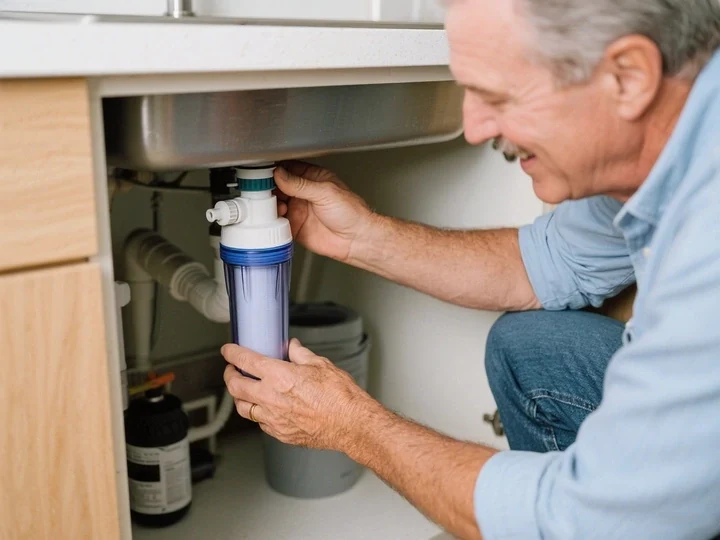
A point-of-use filter installed under the kitchen sink can provide treated water for drinking and cooking without treating every gallon used throughout the house. For some households, that makes more financial sense than installing a whole-house system.
On the other hand, if the concern affects showers, laundry, appliances and multiple faucets, point-of-use filtration may not go far enough.
Think about where the problem actually occurs. That simple question can save you from paying for equipment you don’t really need.
Maintenance Is Not Optional
A water filter can only do its job when it is maintained properly. This sounds obvious, yet it’s one of the easiest things to overlook.
Carbon cartridges have replacement intervals. Reverse osmosis membranes eventually need attention. Other treatment equipment may require cleaning, sanitizing or periodic inspection.
Waiting until the water tastes bad again isn’t always the best maintenance strategy. Filters can become less effective gradually, without producing an obvious warning sign.
Before purchasing a system, find out how often its components need replacing and what those replacement parts cost. A low-priced system that requires expensive proprietary cartridges every few months may not be such a bargain after all.
Bottled Water Isn’t the Only Alternative
Many households turn to bottled water because it’s convenient and consistent. But buying bottles week after week creates storage, transportation and waste concerns.
A properly selected home filtration system can provide a more convenient source of treated drinking water while reducing dependence on disposable bottles. It also gives homeowners more control over the treatment process.
Of course, the system still needs maintenance. There isn’t a magical setup that works forever without attention. But for households that drink a lot of water, the convenience can be substantial.
Make the Decision Based on Your Actual Needs
Choosing a drinking-water system should feel less like buying a gadget and more like solving a household problem.
Start with the source water. Test it if you’re unsure what’s present. Decide whether your priority is taste, odor, a particular contaminant, mineral content or simply a more pleasant drinking experience. Then compare technologies that are actually designed for that goal.
And don’t be afraid to ask questions. A reputable water-treatment professional should be able to explain what a system removes, what it doesn’t remove, how often it needs service and why it’s appropriate for your water.
In the end, better drinking water isn’t about chasing the fanciest technology. It’s about understanding what’s coming out of your tap and making a sensible improvement. Once you’ve found the right fit, the result is pleasantly ordinary: turn on the faucet, fill the glass, take a drink—and don’t have to think twice about it.