Running a commercial property means keeping track of a hundred things at once. There are employees to look after, customers walking through the doors, equipment that needs attention, and operating costs that never seem to stop. Water and air quality may not always sit at the top of the daily checklist, but they have a bigger influence on a building than many owners realize.
From restaurants and hotels to offices, schools, healthcare facilities, and manufacturing spaces, the quality of essential utilities can affect operations, comfort, maintenance, and even the experience people have inside the building. A practical approach to water and air management isn’t about adding equipment simply because it is available. It’s about identifying the actual problems and choosing technology that solves them efficiently.
Why Commercial Water Quality Deserves Attention
Businesses often use far more water than a typical household. Restaurants need water for food preparation and cleaning. Hotels have guest rooms, laundry facilities, kitchens, and pools. Manufacturing facilities may depend on water for processing, cooling, or equipment operation.
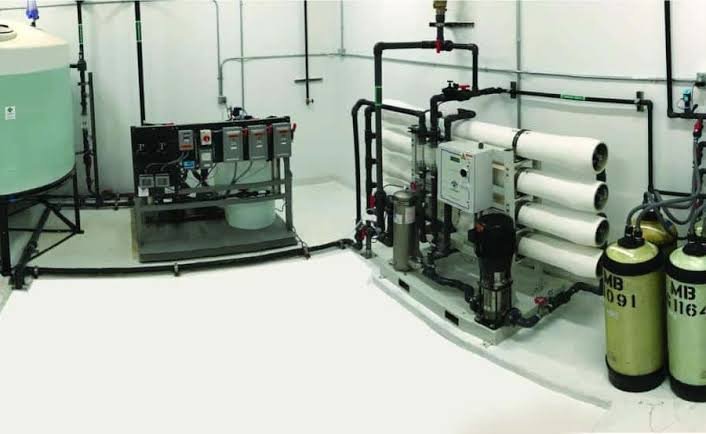
That makes commercial water treatment systems an important consideration for many facilities. These systems can be designed around specific water conditions, such as hardness, sediment, dissolved minerals, unpleasant odors, or other contaminants.
A properly designed treatment setup can also help protect equipment. Hard water, for example, can contribute to scale buildup inside pipes, boilers, water heaters, and other components. Over time, that buildup may reduce efficiency and increase maintenance demands.
The right system depends heavily on the building. Water testing should come before equipment selection, because treating a problem you don’t actually have isn’t a particularly smart investment.
Every Building Has Its Own Water Challenges
Two businesses on the same street can have completely different water requirements. One might rely on municipal water with relatively stable quality, while another could use a private source with elevated iron or sediment.
Water demand matters, too. A small office doesn’t need the same capacity as a busy hotel or food-processing facility. Peak usage can be particularly important because a system that works well at average demand may struggle when several fixtures are operating simultaneously.
That’s why commercial water treatment should be approached as an engineering and planning exercise rather than a simple equipment purchase. Flow rates, pressure, incoming water characteristics, available space, maintenance access, and future expansion all deserve consideration.
A system that fits the building today should ideally have enough flexibility to accommodate tomorrow’s needs.
Air Quality Is Part of the Same Conversation
People spend a lot of time talking about drinking water, but indoor air deserves equal attention. Dust, odors, airborne particles, and other pollutants can affect how comfortable a building feels.
For businesses with high occupancy, maintaining clean indoor air can become especially important. Offices, classrooms, retail spaces, and healthcare environments all have different air-quality considerations.
Professional air filtration services can help identify filtration requirements and determine whether existing HVAC equipment is doing enough. Filters need to be properly selected for the system, installed correctly, and replaced at appropriate intervals.
It’s easy to underestimate filter maintenance. A filter sitting inside an HVAC unit isn’t very visible, so it can stay there far longer than it should. Once it’s loaded with dust, airflow can suffer and the system may have to work harder.
Sometimes the simplest maintenance task has a surprisingly large impact.
Filtration Isn’t One-Size-Fits-All
There are many types of filtration technology, and each has a particular purpose. Mechanical filters can capture particles. Carbon-based media can help reduce certain odors and chemical compounds. Specialized treatment technologies may target specific contaminants.
The goal shouldn’t be to install the most complicated system available. It should be to select the appropriate technology for the building’s actual requirements.
For example, a facility with heavy sediment may need strong prefiltration before other treatment stages. A location dealing primarily with chlorine taste or odor could have very different requirements.
Understanding these distinctions can prevent unnecessary spending and make maintenance much more manageable.
The Role of Advanced Technology
Water and air treatment technology has become increasingly sophisticated. Modern equipment can monitor performance, automate certain processes, and provide information that helps facility managers identify issues before they become major problems.
However, advanced systems aren’t automatically better simply because they contain more technology. A smart monitoring feature is useful if it solves a real operational problem. Automated controls can save time, but only when they’re properly configured.
The best technology is often the technology that fits quietly into the building’s routine.
For commercial properties, reliability matters just as much as performance. A system that delivers excellent results but requires constant attention may not be ideal for a busy facility.
Maintenance Is Where Good Planning Pays Off
Even a well-designed treatment system requires regular care. Filters need replacement, tanks may need servicing, sensors should be checked, and equipment settings can occasionally require adjustment.
Preventive maintenance is usually easier than emergency repair. A clogged filter discovered during a routine inspection is a manageable issue. The same filter causing an unexpected shutdown during a busy business day is a different story.
Facilities should keep records of filter changes, inspections, repairs, and water-quality tests. These records help identify patterns. If a component repeatedly fails or a filter becomes clogged much faster than expected, there may be an underlying problem that deserves attention.
A maintenance schedule should also reflect actual usage. A lightly occupied office and a high-volume restaurant shouldn’t necessarily follow the same timetable.
Efficiency Matters More Than Ever
Energy and operating costs are major concerns for businesses. Water treatment equipment can influence those expenses through water usage, pumping requirements, regeneration cycles, filter replacement, and equipment efficiency.
Choosing appropriately sized equipment can make a difference. Oversizing may increase upfront costs and create unnecessary operating expenses, while undersizing can result in poor performance and premature wear.
Facility managers should look beyond the purchase price and consider total ownership costs. A system that costs slightly more initially but operates efficiently and requires fewer emergency repairs may provide better value over several years.
That’s the kind of calculation that tends to make sense in the real world.
Choosing a Service Partner
Technical equipment is only part of the equation. The company supporting that equipment matters, too.
Look for a provider willing to inspect the property, understand its water and air requirements, explain available options clearly, and provide realistic maintenance recommendations. Be cautious of anyone who immediately recommends a particular system without asking basic questions about water quality, usage, building size, or existing equipment.
Good service should feel like collaboration rather than a sales pitch.
Whether you’re upgrading an older facility or designing treatment for a new building, professional guidance can help avoid expensive mistakes.
A Healthier Building Starts With Practical Decisions
Water and air quality don’t have to become complicated subjects for property owners. The fundamentals are fairly straightforward: understand the environment, identify the problems, choose suitable equipment, and maintain it properly.
Commercial facilities have enough unexpected challenges already. Reliable water and air treatment should reduce problems, not create more of them.
When the right system is selected and maintained, the benefits can be surprisingly quiet. Equipment runs more reliably. Indoor spaces feel more comfortable. Maintenance becomes predictable. And facility managers have one less thing to worry about.
That’s ultimately what good building management is about — not chasing the newest technology, but making thoughtful choices that keep the place working well, day after day.