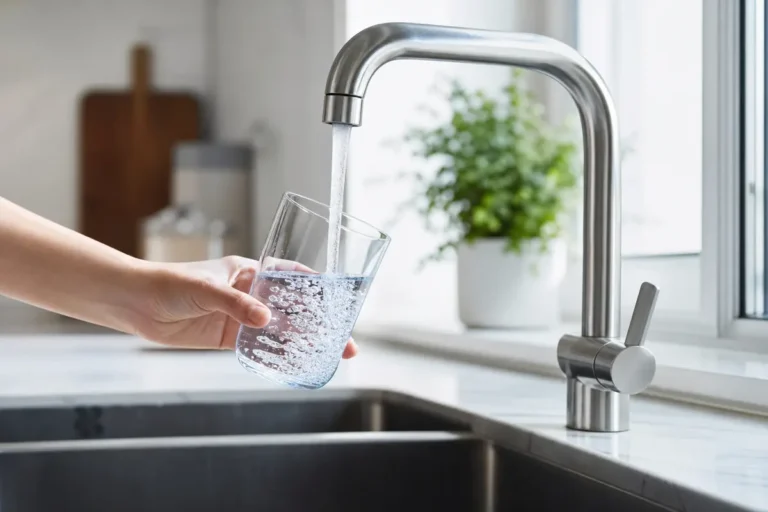
There’s something reassuring about turning on the kitchen tap and knowing the water coming out is clean, pleasant to drink, and suitable for everyday use. Most of us rarely think about it until the taste changes, a glass looks slightly cloudy, or mineral deposits begin appearing around the faucet.
Water can look perfectly clear and still contain substances you’d rather not drink. Depending on the local supply and the condition of household plumbing, water may contain sediment, dissolved minerals, chlorine, microorganisms, or other contaminants. That’s why choosing a treatment system shouldn’t be about buying whatever happens to be popular. It should start with understanding the water you actually have.
What Makes Drinking Water Treatment Different?
Not every water treatment method does the same job. Some systems are designed mainly to improve taste and odor, while others target dissolved substances or microorganisms. A good treatment plan considers the source of the water, household usage, existing plumbing, and the specific concerns identified through testing.
For example, a family worried about unpleasant chlorine taste may need a very different solution from a household dealing with high dissolved solids. Likewise, someone using well water could have completely different treatment needs than someone connected to a municipal supply.
This is where water testing becomes useful. Instead of guessing, homeowners can identify the characteristics of their water and select equipment accordingly. It may sound like an extra step, but it can prevent spending money on technology that doesn’t solve the actual problem.
Understanding Reverse Osmosis
Reverse osmosis is one of the more comprehensive approaches used for drinking-water treatment. The process pushes water through a semipermeable membrane, which allows water molecules to pass while reducing many dissolved substances and contaminants.
For households concerned about dissolved solids, certain minerals, salts, or other impurities, reverse osmosis drinking water systems can be an attractive option. They are commonly installed at a dedicated drinking-water point, such as the kitchen sink, although system configurations vary.
One thing worth remembering is that reverse osmosis isn’t automatically the right choice for every home. It can remove a broad range of substances, but the system may also produce some wastewater and requires periodic filter and membrane replacement. The installation should therefore be sized and configured according to actual household needs.
When Ultraviolet Treatment Makes Sense
Some water concerns aren’t about dissolved minerals at all. They involve microorganisms.
Ultraviolet treatment uses UV light to inactivate microorganisms as water passes through a treatment chamber. It doesn’t rely on adding chemicals to the water, which is one reason some homeowners and businesses consider it when microbial treatment is a priority.
uv purification can be particularly useful in certain private-well applications, where microbial contamination may be a concern. However, UV systems work best when the water entering the unit has appropriate clarity. Sediment and other particles can interfere with the effectiveness of the treatment by shielding microorganisms from the light.
That means UV treatment may need to be paired with pre-filtration. Again, there’s no single piece of equipment that solves every water-quality issue.
Don’t Ignore pH
Water chemistry can be surprisingly complicated. pH is one measurement homeowners may encounter when testing their water, and it describes how acidic or alkaline the water is.
Extremely acidic or alkaline water can create practical concerns, particularly for plumbing and equipment. Acidic water, for example, may contribute to corrosion under certain conditions. On the other hand, changing pH without understanding the broader chemistry isn’t necessarily a good idea.
pH balancing water filters are designed for situations where adjusting water chemistry is part of the treatment goal. The right approach depends on the starting pH, mineral content, alkalinity and other factors. A professional water analysis can help determine whether pH adjustment is actually needed and which method makes sense.
Think About Taste, Too
Technical water-quality measurements matter, but taste shouldn’t be dismissed as something superficial.
If your drinking water has a strong chlorine taste, metallic note, sulfur-like odor, or simply doesn’t taste fresh, you may find yourself buying bottled water even though perfectly usable tap water is available. Over time, that gets expensive — and creates a pile of plastic containers that have to go somewhere.
Carbon filtration is often used to improve taste and odor by reducing certain compounds responsible for those characteristics. Depending on the water chemistry, it can be used alone or as part of a larger treatment system.
The goal isn’t necessarily to make water taste like bottled water. It’s to make the water coming from your own tap something you actually want to drink.
Maintenance Is Part of the System
One common mistake is treating installation as the finish line. It isn’t.
Filters collect what they’re designed to remove. Membranes gradually lose performance. UV lamps and components have service requirements. Even a well-designed system can become less effective when maintenance is ignored.
Replacement schedules vary depending on the equipment, water quality and household consumption. Manufacturers generally provide maintenance recommendations, but actual conditions can affect how often components need attention.
It’s a good idea to keep track of filter changes and inspections. Put a reminder on your calendar if necessary. Five minutes spent checking a maintenance date is much easier than discovering months later that an overdue filter has been sitting beneath the kitchen sink.
Consider the Whole Household
A drinking-water system is usually intended for specific water uses rather than the entire home. That’s important because not every household needs highly treated water flowing through every faucet.
You might want advanced treatment for drinking and cooking while using a separate approach for whole-house concerns such as hardness, sediment or iron. In some cases, a combination of technologies makes more sense than trying to force one system to handle everything.
Household size matters, too. A system that works beautifully for one or two people may be undersized for a large family that cooks frequently and consumes significant amounts of water.
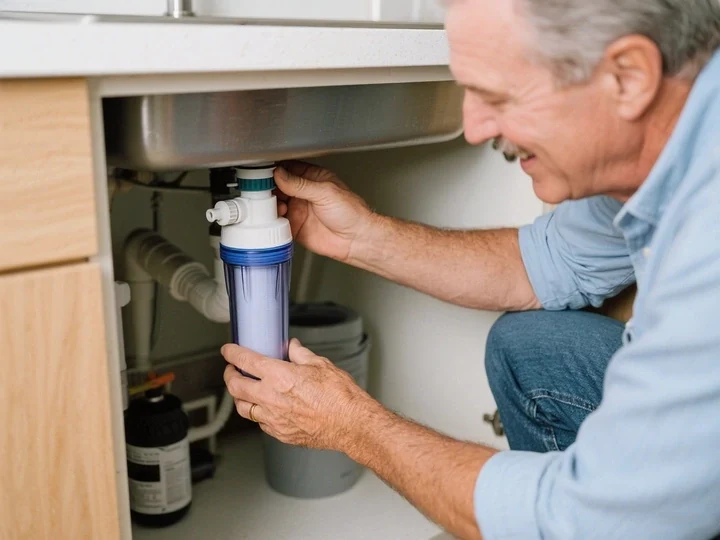
Think about convenience as well. Filter replacement should be reasonably accessible. Storage tanks, where used, need appropriate space. Installation should fit the existing plumbing without creating unnecessary complications.
Get Advice Based on Your Water, Not a Sales Pitch
There are plenty of water-treatment products available, and it can be difficult to separate genuinely useful technology from unnecessary extras.
A reliable professional should start by asking questions. Where does your water come from? What problems have you noticed? Has the water been tested? How many people live in the home? Are there existing filtration or softening systems?
Those questions are a good sign because they indicate that the recommendation is being based on circumstances rather than a one-size-fits-all package.
A proper assessment may even reveal that you don’t need an expensive system. Sometimes a relatively simple filter is enough. Other times, the water chemistry calls for multiple treatment stages. The right answer depends on the evidence.
Better Water Starts With Better Decisions
Clean drinking water isn’t about owning the most complicated equipment under the sink. It’s about matching the treatment method to the water and using that equipment properly over time.
Testing provides the starting point. Understanding treatment technologies helps you compare options. Proper installation and maintenance keep the system performing as intended.
And perhaps the simplest measure of success is one people often overlook: you open the tap, fill a glass, take a sip, and don’t have to think about it.
That’s the kind of convenience good water treatment should provide — quietly, consistently, and without making everyday life more complicated than it needs to be.