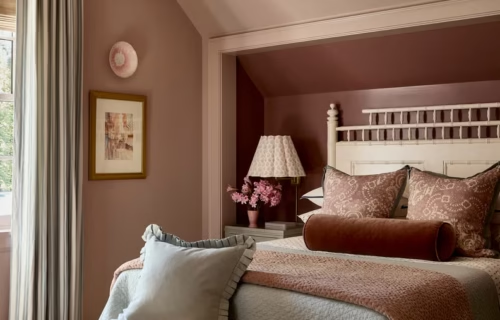
Interior vs Exterior Paint: What’s the Real Difference?
Ever stood in a paint shop and wondered why there are two entirely separate walls of cans, one labeled “interior” and the other “exterior”? Isn’t paint just paint? That’s the exact question a friend of mine asked me last year, right before she used leftover exterior paint to touch up her bedroom wall — and regretted it within a week. Understanding interior vs exterior paint isn’t just some technical detail paint companies invented to sell more cans. The chemistry is genuinely different, built for completely different jobs. One’s made to survive monsoons, direct sun, and temperature swings. The other is made to look good, smell less, and hold up to daily indoor life. Mixing them up costs you money and time.
What Makes Interior and Exterior Paint Chemically Different
Quick answer: Interior paint is formulated for lower VOC emissions, easier cleaning, and a smoother finish, while exterior paint contains more flexible resins and UV-resistant additives designed to survive rain, heat, and temperature changes outdoors.
The resin binders are where the real difference lives. Exterior paint uses binders that stay flexible even as temperatures rise and fall, since Indian summers can push wall surfaces well past 45°C in places like Rajasthan and Delhi. Interior paint doesn’t need that flexibility because your living room walls aren’t baking in direct sun.
Exterior formulas also pack in mildewcides and UV blockers. Without them, outdoor paint would chalk, fade, and grow mold within a single monsoon season. Interior paint skips most of that because, frankly, it doesn’t need to fight nature the same way.
VOC Levels and Why They Matter Indoors
This one’s genuinely important for health, not just performance.
Interior paints are formulated with lower VOC (volatile organic compound) content, generally under 50 grams per litre for premium low-VOC options, compared to standard exterior paints which can run considerably higher. Breathing in high-VOC fumes in an enclosed bedroom for days isn’t something I’d recommend to anyone, especially with kids or elderly family members around.
- Interior paint: lower odor, faster off-gassing, safer for enclosed spaces
- Exterior paint: higher VOC tolerance since it’s used outdoors with natural ventilation
- Some exterior paints, if used indoors, can leave a lingering smell for weeks
I’ve noticed people assume “eco-friendly” labels apply equally to both types. They don’t always. Always check the can specifically for indoor-use certification if that matters to you.
Durability and Weather Resistance
Exterior paint is built to survive things interior paint was never designed for — direct sunlight, driving rain, dust storms, and daily temperature swings.
Picture a small business owner in Jaipur repainting their shop’s exterior right before summer. If they’d used interior-grade paint by mistake (it happens more than you’d think, especially with leftover cans), that paint would likely start fading and cracking within a few months under the harsh sun. Exterior paint, with its UV-resistant additives, is built to handle exactly that kind of punishment for 5-7 years before a repaint is needed.
Interior walls don’t face that stress. So interior paint is optimized instead for scrubbability and a smoother finish — things that matter more for a wall someone brushes past daily than one that just needs to survive weather.
Finish and Appearance Differences
Quick answer: Interior paints usually come in matte, eggshell, satin, or gloss finishes optimized for indoor lighting and touch-ups, while exterior paints lean toward satin or semi-gloss finishes that shed rainwater and resist dirt buildup on outdoor surfaces.
- Interior finishes prioritize a smooth, even look under artificial lighting
- Exterior finishes prioritize water shedding and resistance to grime, pollution, and dust
- Gloss levels differ too — high-gloss exterior paint is common on gates and grilles, less so on living room walls
Can You Use Exterior Paint Indoors (Or Vice Versa)?
Technically you can, but I’d genuinely advise against it, and here’s why.
Exterior paint indoors traps VOCs in an enclosed room longer than they’d take to dissipate outside. It can also feel harsher, glossier, and less pleasant to live with day to day.
Interior paint used outside is worse, honestly. It lacks the UV protection and flexible binders needed to survive sun and rain, so you’ll likely see peeling, fading, or cracking within a single season — sometimes faster if the wall faces direct afternoon sun. [link to related guide on exterior wall paint durability here]
Cost Comparison: Interior vs Exterior Paint in India
Exterior paint generally costs more per litre than interior paint, mainly because of the added UV-resistant and weatherproofing additives.
- Interior emulsion: roughly ₹250-500 per litre for mid-range brands
- Exterior emulsion: roughly ₹350-700 per litre for comparable quality
- Premium exterior weatherproof paints can go beyond ₹800 per litre
It might feel tempting to save money using interior paint outside just once. Don’t. The repainting cost you’ll face within a year usually outweighs whatever you saved upfront.
Choosing the Right Paint for Mixed-Use Spaces
Balconies, covered verandas, and semi-open areas confuse people constantly, and honestly, it’s a fair confusion.
For a covered balcony that gets some rain splash but mostly shade, a good exterior-grade paint is still the safer bet, even though it’s technically a “half-indoor” space. Direct exposure to any weather element pushes the decision toward exterior paint every time. [link to related guide on paint for balconies and semi-outdoor spaces here]
FAQs About Interior vs Exterior Paint
Can I use exterior paint on interior walls? You can, but it’s not ideal. It traps VOCs indoors longer and often has a glossier finish that doesn’t suit typical living spaces as well as interior-grade paint does.
Is exterior paint more durable than interior paint? For outdoor use, yes, since it’s built with UV resistance and flexible binders. Indoors, that extra durability isn’t necessary and interior paint actually performs better for daily wear and cleaning.
Does exterior paint smell worse than interior paint? Generally yes, mainly due to higher VOC content in many formulations. Interior paints are specifically designed with lower VOC levels for enclosed spaces.
Which paint lasts longer, interior or exterior? Exterior paint typically has a longer functional life outdoors, around 5-7 years, because it’s formulated to resist weather. Interior paint’s lifespan depends more on foot traffic and wall usage than weather exposure.
Can interior and exterior paint be mixed together? It’s not recommended. The chemical formulations differ enough that mixing them can affect drying time, finish quality, and durability in unpredictable ways.
Is exterior paint waterproof? Most exterior paints are water-resistant rather than fully waterproof, though many premium weatherproof exterior paints do offer strong protection against rain and moisture over time.
Final Thoughts
The interior vs exterior paint debate really comes down to what job you need the paint to do. Interior paint is built for comfort, lower odor, and daily wear indoors. Exterior paint is built to survive whatever the weather throws at it. Using the wrong one, even once, usually costs more in repainting than it saved upfront.
If you’ve got a repaint coming up in 2026, tell your paint dealer exactly where the paint is going — indoors, outdoors, or somewhere in between like a balcony — and let that guide the can you walk out with. It’s a five-minute conversation that saves months of regret later.