Paint Colors That Match Furniture: A Simple Guide
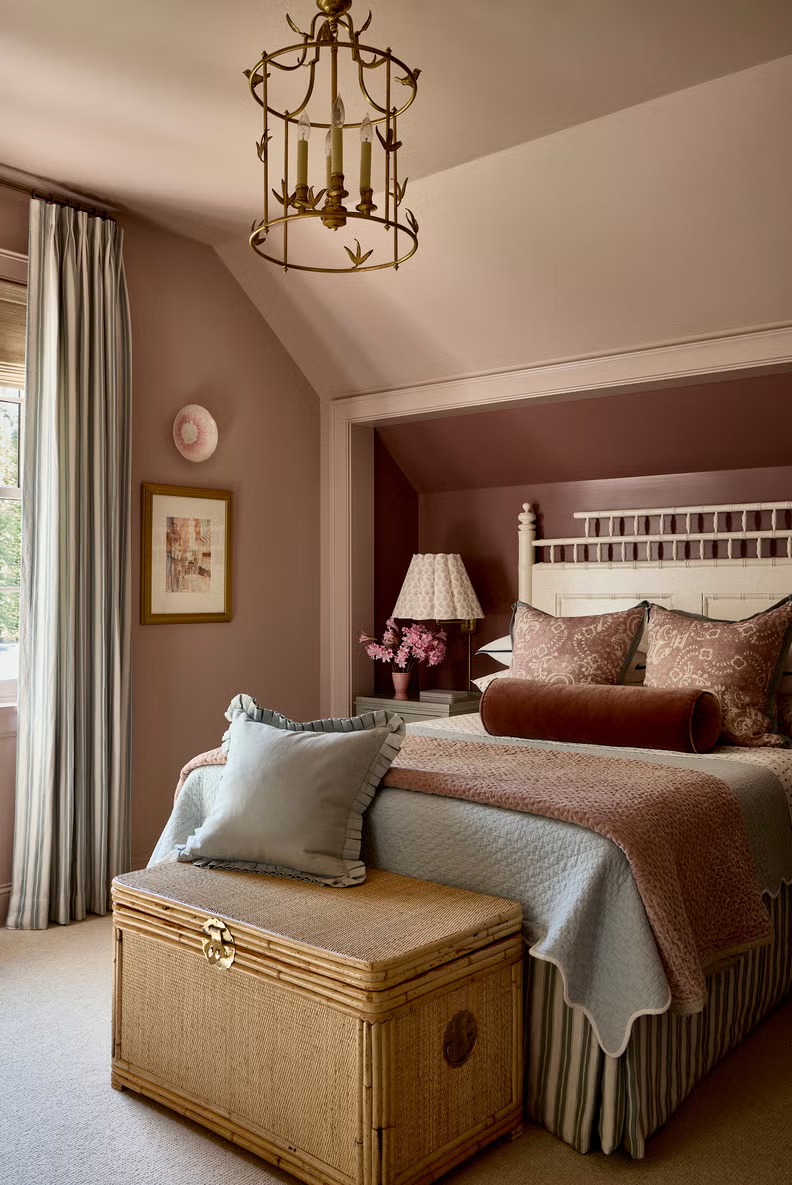
You bought the sofa first. Now the walls need to catch up, and every swatch you hold against it looks either too matchy or completely wrong. Sound familiar? Picking paint colors that match your furniture is one of those things that seems simple until you’re standing in a paint shop with three shade cards and a photo of your living room on your phone, second-guessing everything. I’ve been through this exact scene more times than I’d like to admit, helping friends and family pick shades for rooms that already had furniture sitting in them. The good news — there’s an actual method to this, and it doesn’t require repainting your walls three times before you get it right.
Start With Your Biggest Furniture Piece, Not the Walls
This is the mistake almost everyone makes. They pick a wall color they like in isolation, then try to force the furniture to work with it.
Quick answer: Always choose your paint color after your largest furniture piece is in place — usually the sofa, bed, or dining table — since it anchors the room and everything else, including the walls, should support it rather than compete with it.
Flip that order around. Look at your sofa, your bed frame, whatever dominates the room visually. Pull one undertone from it — not the obvious color, the undertone. A grey sofa might actually lean warm (beige-grey) or cool (blue-grey), and this changes everything about which paint colors match furniture like that.
Here’s a trick I use: take a photo of the furniture in natural daylight, then zoom in on a shadowed fold of fabric. That’s usually where the true undertone shows up, not the brightly lit parts.
Understand Warm vs Cool Undertones First
Paint and furniture both carry hidden warm or cool undertones, and mismatching them is the single biggest reason a room feels “off” even when the colors seem fine on paper.
- Warm undertones: yellows, oranges, reds, warm browns — think teak wood, terracotta, mustard upholstery
- Cool undertones: blues, greens, greys, cooler blacks — think walnut with grey tones, navy fabric, charcoal finishes
- Neutral pieces (rare, but they exist) can go either way, which honestly makes life easier
If your furniture is warm-toned wood — a lot of Indian homes have sheesham or teak furniture — pairing it with a cool, stark white or icy blue on the walls tends to look jarring. I’ve noticed clients regret this exact combination more than any other. Warmer whites, soft beiges, or muted greens work far better here.
Use the 60-30-10 Rule for Room Balance
This old interior design rule still holds up, and it’s genuinely useful when you’re trying to match paint colors to furniture without overthinking it.
Basically: 60% of the room should be your dominant color (usually the walls), 30% a secondary color (often the furniture itself), and 10% an accent (cushions, art, a rug). If your furniture is already a strong color — say, a deep maroon sofa — your walls shouldn’t fight it for attention. Let the walls sit quietly at 60%.
Picture This: A Real Living Room Scenario
Picture a homeowner in Pune who just bought a walnut-finish TV console and a mustard-yellow accent chair for their living room. They wanted white walls because “white goes with everything” — a phrase I hear constantly, and one I mildly disagree with.
Stark white next to warm walnut and mustard actually made both pieces look slightly out of place, almost too loud against the cold backdrop. Switching to a warm off-white with a hint of cream instantly tied the whole room together. Sometimes “safe” isn’t actually the safest choice.
Test Samples Before Committing
Quick answer: Buy sample pots (usually ₹150-300 for a small tester tin from brands like Asian Paints or Berger) and paint a 2×2 foot patch directly on your wall, then observe it at different times of day before finalizing your color.
Don’t trust the tiny swatch card. Paint chips lie constantly under artificial lighting.
- Paint a patch near your furniture, not in a random corner
- Check it in morning light, afternoon light, and under your evening bulbs
- Live with it for at least 2-3 days before deciding
Don’t Ignore Your Flooring
Your floor is basically furniture too, in terms of color influence. Dark wood flooring, reddish tile, or pale marble — each one shifts how a wall color reads once it’s up.
If you’ve got reddish oxide flooring, which is still common in older Indian homes, very cool blues on the wall can create an odd, almost muddy contrast. [link to related guide on flooring and wall color pairing here] Warmer neutrals or soft sage greens tend to bridge the gap better.
When Your Furniture Has Multiple Colors
Not every room has one dominant furniture color, and that’s fine, honestly it’s more common than people think.
- Pick the color that repeats most across pieces — that’s usually your safest anchor
- If nothing repeats, go with a neutral wall and let an accent wall or textile tie things together
- Bold patterned furniture (florals, geometric prints) usually needs a genuinely quiet wall color, almost boring by comparison
Has this ever happened to you — a room with a patterned rug, a striped cushion, and a solid sofa, all fighting for attention? The wall color is what calms that down, not adds to it.
FAQs About Matching Paint Colors With Furniture
What color walls go with dark wood furniture? Warm whites, soft greens, and muted blues tend to work best. Dark wood already brings a lot of visual weight, so the walls should feel lighter and calmer rather than competing with it.
Should walls be lighter or darker than furniture? Generally lighter, especially in smaller rooms, since dark walls with dark furniture can make a space feel cramped. In larger rooms, a darker wall with lighter furniture can actually look striking.
How do I match paint color to a specific sofa? Pull the undertone from the fabric, not the main color itself. A grey sofa might have warm or cool undertones, and matching that undertone matters more than matching the exact shade.
Can I use white walls with colorful furniture? Yes, but choose the right white. Warm whites and off-whites usually pair better with colorful or wood furniture than stark, cool whites, which can feel clinical next to warmer tones.
What’s the best paint finish for living rooms? Matte or eggshell finishes are popular for walls since they hide minor imperfections well, while satin finishes hold up better in high-traffic zones and are easier to wipe clean.
Do I need to match paint exactly to furniture color? Not at all, and honestly you shouldn’t try to. Complementary or slightly muted tones usually look better than an exact match, which can feel flat and overly coordinated.
Final Thoughts
Getting paint colors that match your furniture right isn’t about finding some perfect formula — it’s about slowing down enough to notice undertones, test properly, and trust your eye over the swatch card. Start with your biggest piece of furniture, respect warm versus cool undertones, and always test before you commit to a full wall.
If you’re planning a repaint in 2026, grab two or three sample tins this weekend, paint them right next to your furniture, and give it a few days before deciding. Your walls will thank you, and so will your furniture. [link to related guide on choosing paint finishes for Indian homes here]